Are humans going to be replaced by robots?
29/10/2021
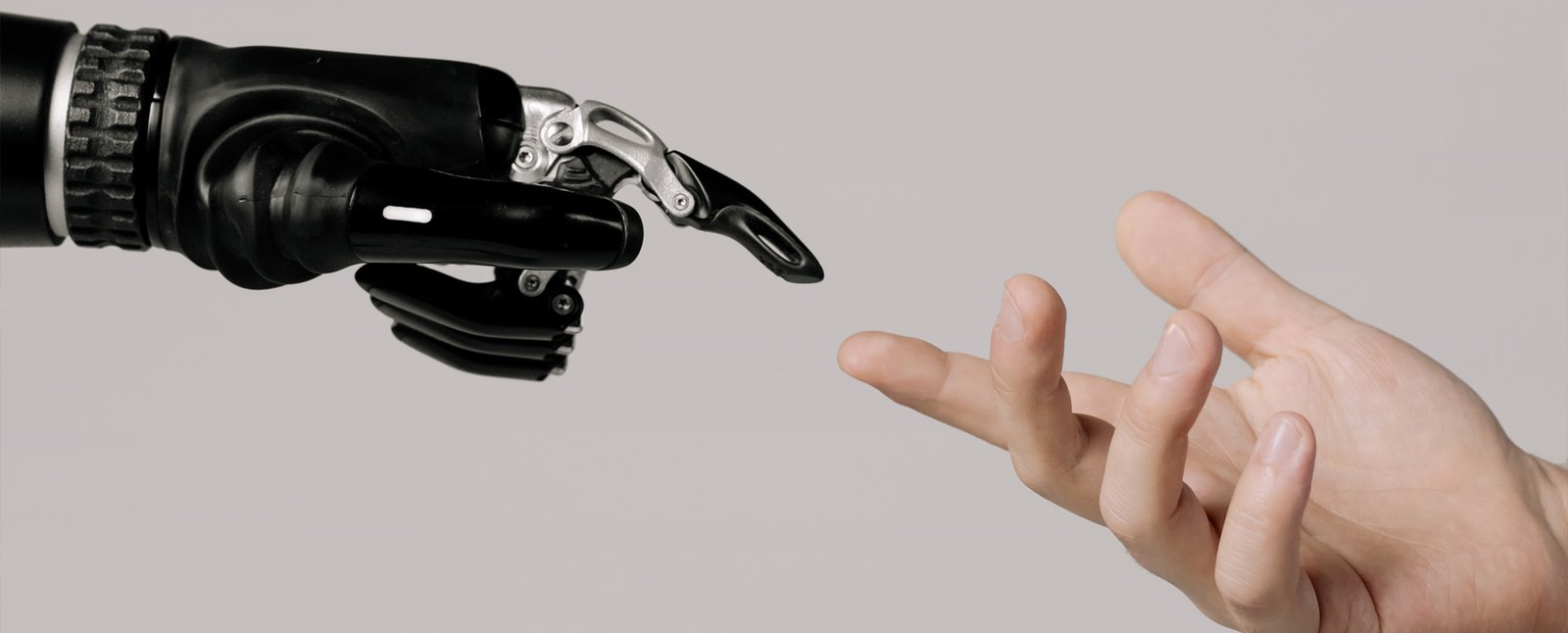
Remember the movie "I, Robot"? The year is 2035 and robots are everyday objects. In fact, they help people carry out all kinds of tasks.
Remember the movie "I, Robot"? The year is 2035 and robots are everyday objects. In fact, they help people carry out all kinds of tasks.
Twenty percent of the population has one at home thanks to advances in Artificial Intelligence and robotics, and they have become the best helper a human could ask for.
Until it all falls apart because of the robots' greed to rule the world. If you had not seen it, I have just spoiled it for you, but this spoiler is justified.
In this post I want to talk about why robots are good allies and why we should not fear their arrival. No one should be wary of these technological beings, because, even though they may look like a threat to many jobs, their real mission is to help us evolve by creating different jobs that only a human can do.
According to Oxford...
Within 20 years, 47% of the jobs humans do today will be performed by robots. Over the past few decades, progress in robots' capabilities has advanced slowly and, although it has not been as fast as in the Will Smith movie, that progress already outpaces the advances we have made in human capabilities.
It is easy to imagine that at some point along the timeline, robots will end up matching humans at practically every task. But we have to keep in mind that whatever progress we make with these machines is meant to be used for our benefit, not to end up letting them run the planet.
This is a question we have been adjusting to for several centuries, because robots have been replacing us in work tasks all that time and, for the past 70 years, they have done so under the control of computers.
Artificial intelligence (AI) is a field where computers are trained to carry out tasks that previously only humans could do and which, however many centuries it takes, they will quite likely end up doing for any job they are asked to perform.
What are brain emulations?
In a future world full of robots, there may also be robots based on brain emulations. Brain emulations are like a "copy or scan of the brain", in which its characteristics and cellular connections are recorded in order to build a computer model that processes signals the way a human brain would.
We are still years away from witnessing a brain emulation good enough to behave much like a human, but when we get there, these emulations will be able to remember the past, be aware of the present and imagine a future.
What happens if robots end up replacing humans?
The possibility of robots taking our jobs is nothing new, but it now feels increasingly real. Within a few decades, we will witness one of the most significant transformations in the production of goods and services, one that will affect the global economy.
We already know that the jobs most affected will be the mechanical, repetitive ones that a machine can handle without any trouble. In most cases these robots will support the human, an extra pair of hands for moments of heavy workload, but in others they will carry out the entire task themselves.
What we have to keep in mind with any of these advances is that humans will always be far more valuable than any machine, and that these robots exist only to support us in our own development.
Which jobs have already been replaced by robots?
The idea that robots can carry out certain tasks on their own is becoming more real, and there are already examples across different sectors where we can see it: self-checkout tills in retail stores, driverless cars that have already been tested in the United States and Germany, algorithms that gather and analyze data once handled by people, robotic surgery capable of detecting and repairing tumors, or customer service assistants like chatbots.
How do robots affect our jobs?
What is clear is that the advances are not going to stop coming. The change in how we work and relate to one another is already a fact. But just as robots will replace us in some jobs, new jobs tied to these technologies will emerge.
In fact, in 2020 the Fourth Industrial Revolution was responsible for eliminating 7 million jobs in the name of digital transformation. With Industry 4.0, though, jobs were not only eliminated: another 2 million jobs that did not exist before were created, reinventing some professions that have adapted to this new technological era.
Professions that will evolve toward technology
Lawyers will see some of their most routine tasks handled by AI. Journalists and copywriters already have bot colleagues capable of capturing and classifying information from different sources. Chefs will watch kitchen robots become more and more autonomous. And doctors will get more robotic help to diagnose or perform surgery. In every case, behind a robot there must always be a person giving it the right instructions.
Conclusion
Now is the time to reflect on how technology will shape each job over the coming decades, and to think about which skills are worth acquiring so that no one is left out of that "conversation".
Robots and Artificial Intelligence have arrived to make our lives easier and to handle the tasks a human cannot perform with the same precision. What we are clear about at Neurafy is that no robot will be able to imitate human empathy and creativity, so there will be skills that remain irreplaceable.
It is important to understand that the number of jobs and the rollout of technology are not at odds: they complement each other. For our clients, technological advances mean significant economic growth for their companies, which in turn means more jobs.